Sign in to Loot Audio
Access your downloads, purchases and more
Access your downloads, purchases and more

Pulse is a revolutionary new downloader offering blazing fast speeds and powerful control over your libraries. Loot Audio uses Pulse to power some of our downloads and to make managing your libraries more efficient for you.
After your purchase we will send you a unique code (you will also find the code in your account). Use the code with Pulse to power your download and installation. More information about Pulse can be found here.
What are Credits?
You earn Credits every time you purchase a product from Loot Audio. 3% of your order is added to your account in the form of Credits.
Use Credits for money off future orders or convert them to Sample Credits to download samples from the Sounds section of the site.
State Of The Art Room Acoustics and Reverberation
$179.00
Earn 450







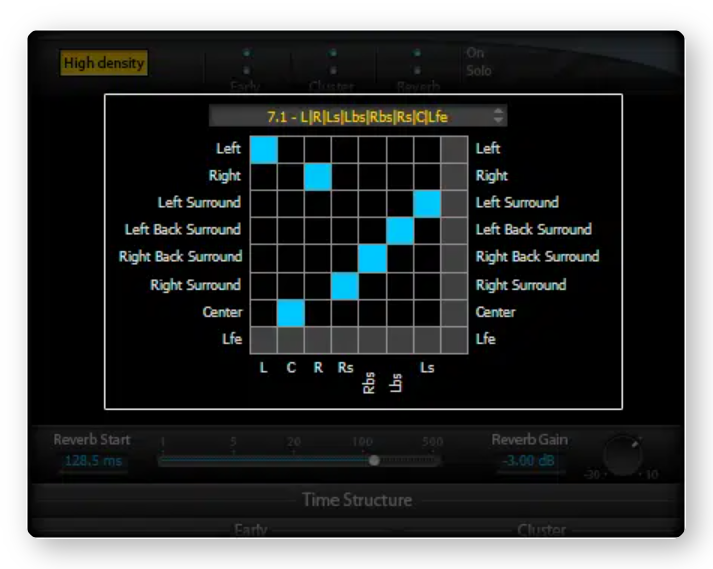
Ircam Verb provides 16 input and output channels presenting the option for reverberation processing in multi-channel and surround formats, including Ambisonics and Dolby Atmos®.
With a built in Input/Output (I/O) routing matrix instant flexibility is provided for configuring the I/O in relation to the physical audio monitoring in the control room.
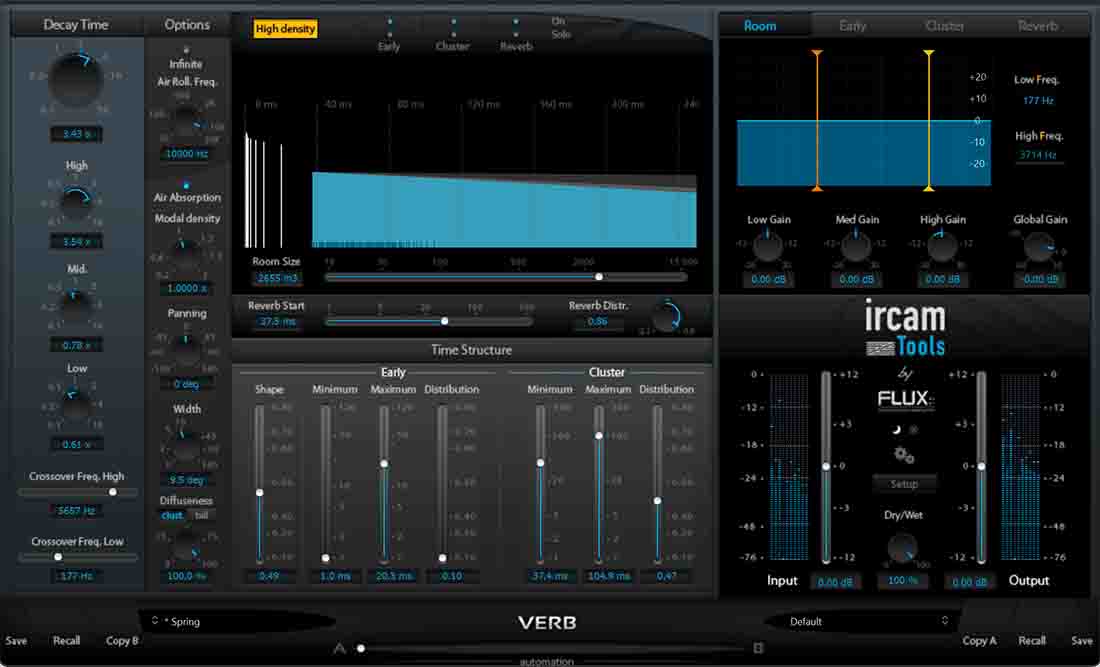
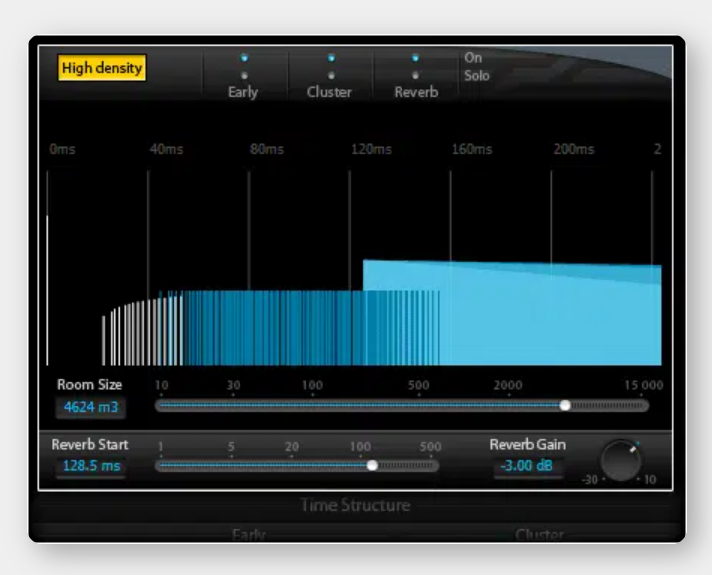
Graphical representation of the Early, Cluster and Reverb with controls for High density (standard/high density reverberation engine), Early, Cluster and Reverb On/Solo controls, and Room Size, Reverb Start and Reverb Gain controls.
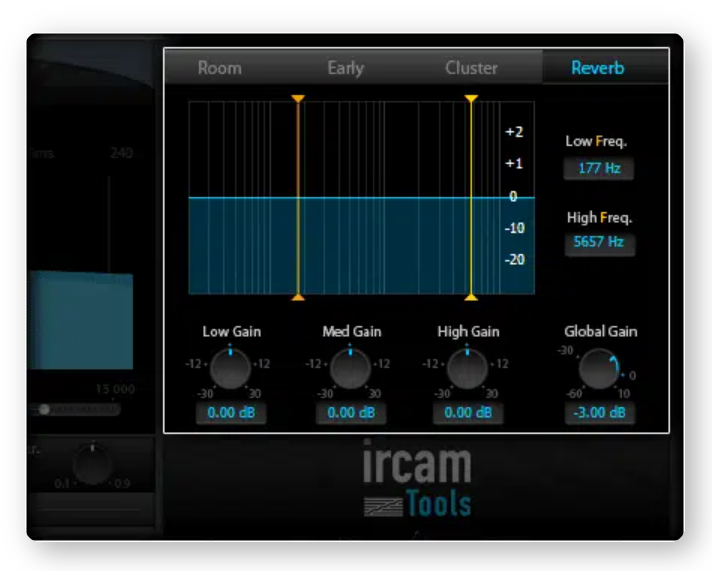
A set of 3-band filters applied to each part of the time structure for fine tuning the reverberation characteristics
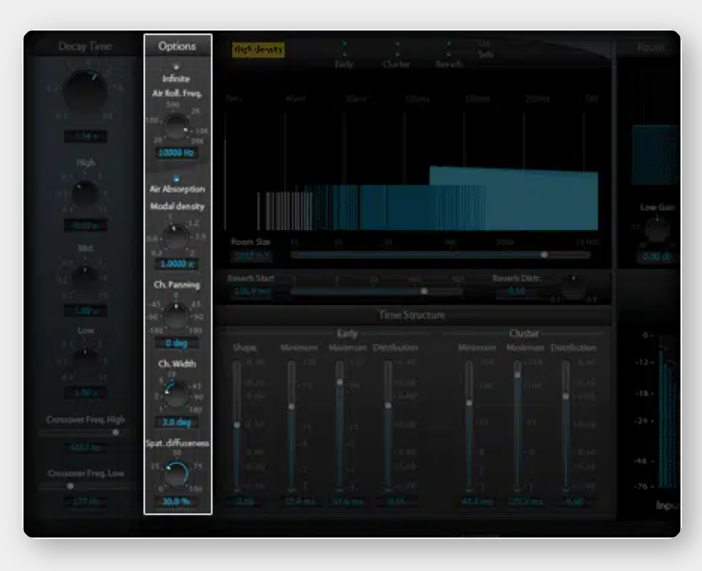
Creative reverb options including; Infinite (“deep-freezing” the reverb). Air Absorption/Roll Freq. simulates the frequency dependent air absorption. Modal Density, the frequency “smoothness” of the Verb engine. Panning, virtual source panning-direction offset. Width, panning width. Diffuseness, the directional information of the reverberation.
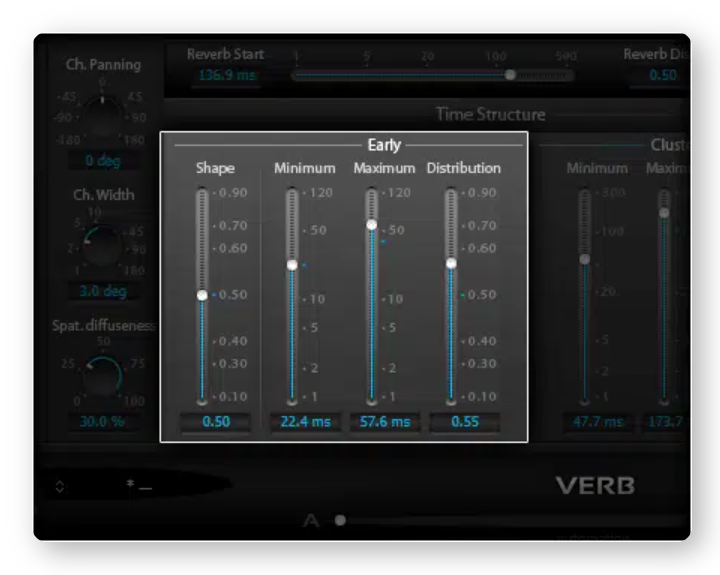
Early Time Structure controls, with Early shape controlling the amplitude rise or fall of early reflections, Early Min controlling the time at which the early reflections start to appear, Early Max controlling the time at which the early reflections cease to appear and Early Distribution controlling the way early reflections are scattered in time.
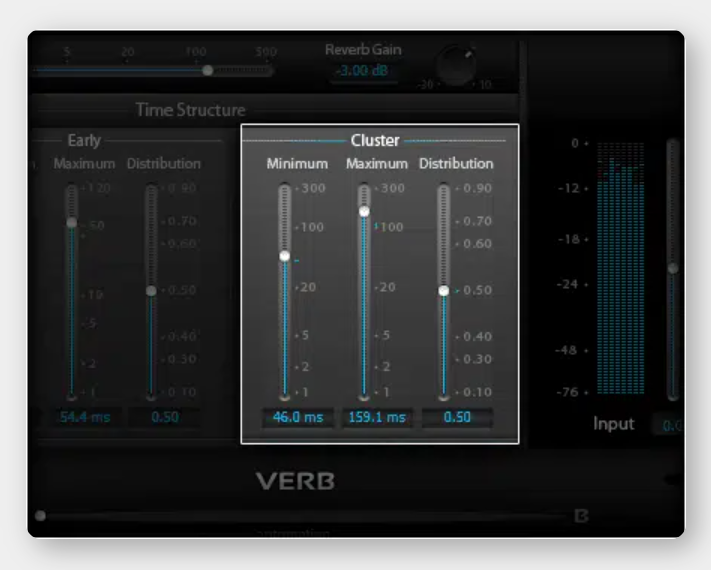
Cluster Time Structure controls, with Cluster Min controlling the time at which the Cluster start to appear, Cluster Max controlling the time at which the Cluster cease to appear and Cluster Distribution controlling the way the Cluster is scattered in time.